Can You Ever Go Home Again?
They say absence makes the heart grow fonder. They lie. What absence actually does is clear your eyes. It strips away the familiar fog that keeps you blind to the decay around you. You spend years away from the place you were born, you come back, and the shock hits you right in the teeth. You realise the home you remembered is gone. Worse than that, you see that the whole structure has turned hollow. It is a stage set held together with spit and string.
I spent four incredible years living in South Korea from 2019 to 2023. It was a proper revelation. The sheer contrast to what I grew up with back in Britain was staggering. Over there, things worked. You walked down the street at three in the morning and you felt completely safe. The train arrived exactly when the board said it would. People took pride in their graft. The local bloke running the corner shop - GS25 - treated you with a bit of respect, and you gave it right back. There was a collective effort, a shared understanding that everyone had to pull their weight to keep the wheel turning. I found myself adapting to a rhythm that felt clean, functional, and purposeful. It was a lifestyle built on efficiency and a quiet sort of social trust.
Then 2023 came around. I decided it was time to head back to the UK. I thought I missed the old routines. I thought I wanted the familiar pubs, the proper football crowds, the banter with the lads, the comfort of knowing the terrain.
What a massive fucking mistake that was.
The country I stepped into was completely unrecognisable from the place I carried in my head. It felt like walking into a house that had been locked up and left to rot for a decade. It was like leaving the 21st century and arriving in the 19th. The decline was not subtle. It was screaming at you from every broken pavement, every boarded-up shopfront, and every tired, angry face on the high street.
Everything felt incredibly artificial. People were going through the motions of a society that had already died. The politicians on the telly spouted bullshit about British values while the literal infrastructure crumbled around their ears. You could not get a doctor appointment. The trains were either cancelled or cost a week of wages. The local pub, once the beating heart of the community, was either a gentrified gastro-café charging a day of graft for a pint or a sad, empty shell.
The social fabric was completely torn. People seemed permanently on edge, ready to snap at the slightest provocation. There was no shared purpose anymore. Everyone was locked in their own little bubble, glued to their phones, completely indifferent to the world outside. The sense of community I grew up with, the working-class solidarity where neighbours looked out for each other, was totally gone. It had been replaced by a cheap, plastic imitation. It was a culture obsessed with image and completely devoid of substance. And when did everybody become so fat?
I tried to settle. I really did. I set up my workspace, tried to run my business, tried to catch up with old mates, tried to find that old spark. But the illusion was shattered. Once you see the matrix, you cannot unsee it. You cannot go back to pretending the plastic flowers are real. Running my own firm meant interacting with the UK business environment, and that was a total eye-opener. The incompetence from external organisations was staggering. Corporate suppliers could not handle basic orders. Bank managers hid behind automated phone trees. Local bureaucrats performed usefulness while drowning simple tasks in endless red tape. It was a giant, exhausting charade designed to hide the fact that nobody knew how to actually get things done anymore.
The breaking point came fast. Six months was all I could stomach. Six months of watching a society eat itself alive while pretending everything was grand.
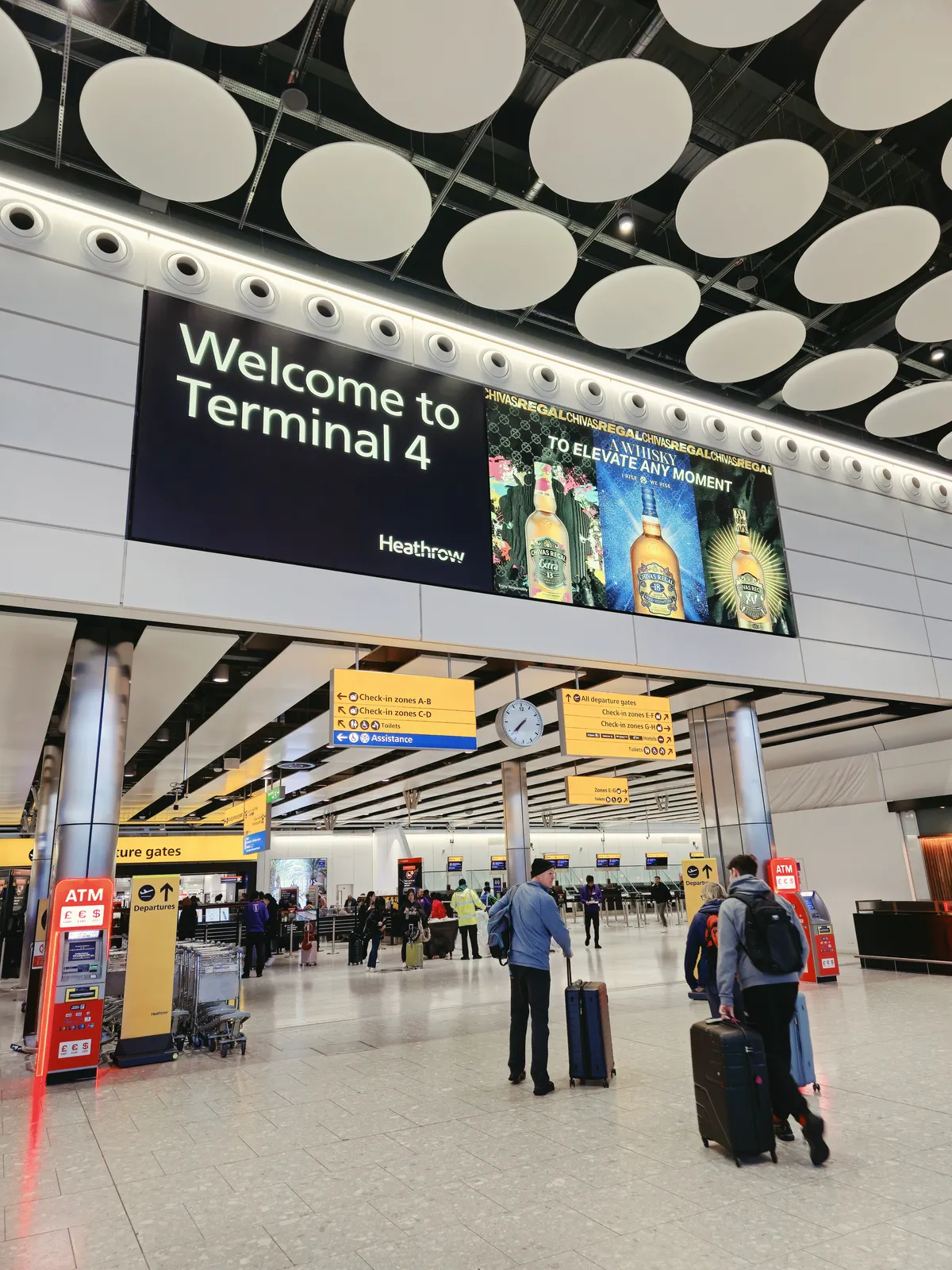
I packed my life into two bags, booked a one-way ticket, and headed straight for London Heathrow. Walking into Terminal 4 felt like entering an escape hatch. I remember sitting in the departure lounge, looking out at the grey tarmac, feeling a massive weight lift off my shoulders. I boarded that plane and I did not look back. I chose freedom over a slow death in a dying culture. I chose to build a completely new life in southeast Asia, and I have been doing exactly that ever since. Out here, life has a raw honesty to it. It is not perfect, but it does not pretend to be something it isn't.
Can a person truly go home again?
The short answer is no. You can return to a geographic coordinate, sure. You can walk the same streets, look at the same brick buildings, stand in the same parks. But the home you are looking for does not exist in the bricks and mortar. It exists in the spirit of the place, and when that spirit dies, the home dies with it.
Going back after seeing how the rest of the world operates is a lonely experience. You become a ghost in your own story. You speak the language, you know the cultural references, but you are completely alienated from the mindset. You see the artificiality that everyone else accepts as normal. You watch people tolerate the intolerable, accept the decline, and defend the very systems that are crushing them. You realise you do not belong there anymore. The lads you used to drink with seem trapped in a loop. The whole system seems like a parody of a functioning nation.
Leaving your homeland for good is a heavy thing. It cuts you loose from your moorings. You become a man between worlds, a perpetual outsider. But I would take that outsider status any day of the week over the slow, suffocating conformity of a society in terminal decline.
Heathrow Terminal 4 was not just a airport terminal for me. It was a line in the sand. It was the moment I refused to accept a life dictated by an artificial, crumbling system. The UK will always be the place I came from, the place that shaped my bones and my speech. But it is no longer home. Home is wherever you can live with your eyes wide open, breathing clean air, away from the theatre of a dying world.